Protocol Safe per-trial
$100K–$250K
Per-trial deployment inside the sponsor’s cloud, with full Implementation Lead support, validation package, and GVP Module VI alignment documentation.
Loading...
Burna grades adverse events with the evidence attached at the point of clinical encounter: source sentence, CTCAE criterion, WHO-UMC or Kramer attribution path. Protocol Safe deploys inside your cloud. The signal flows out. The protocol stays in.
42 oncology regimen profiles. 850 CTCAE criteria. WHO-UMC and Kramer attribution, citation-bound by design. Sponsor-tenant deployment; protocol context stays inside the sponsor environment. 21 CFR Part 11 e-signature trail. GVP Module VI aligned.
Of deaths in oncology, attributable to poor adverse event management. The patient-impact reason safety data integrity is a clinical outcome, not a paperwork outcome.
Per year, that a blockbuster oncology asset can generate. Phase 1 first-in-human through 20+ years of postmarket surveillance, the same citation discipline at every stage.
Of investigator-assigned attributions changed by central review today. Hillman, JCO 2010. Le-Rademacher, Annals of Oncology 2017. Burna closes the gap with named-algorithm attribution.
For pharmacovigilance teams (Chief Safety Officer, VP PV, Safety Medical Officer), see /pharmacovigilance.
MAH portal · literature · social listening · HCP report
Coded with citation back to the reporter narrative
WHO-UMC or Kramer attribution path attached
Safety Medical Officer adjudicates a pre-processed case
A clinical site submits an SAE. The case lands at the desk of an SMO who has six other cases open. The attribution decision was made by an investigator who saw the patient last week. The SMO either accepts the attribution or escalates it. The architecture Burna is building is built for that desk.
Every Safety Medical Officer reading this page already knows the rhythm. The attribution is the decision that downstream pharmacovigilance inherits. Burna is built upstream of where pharmacovigilance can help.
Lifecycle scale
A blockbuster oncology asset moves from ten thousand trial patients to three hundred thousand-plus per year postmarket the day it is approved. 21 CFR 314.80 is a permanent obligation. Burna’s architecture scales with the asset, from first-in-human safety reporting through commercial-scale ICSR processing, with the same citation discipline at every stage.
Upstream of PV
Veeva Vault Safety, Argus, ArisGlobal, and offshore vendors manage cases after attribution is already made. Burna lives upstream, where investigators decide whether an adverse event belongs to the regimen, the investigational drug, the disease, or a confounder. Cross-site attribution consistency surfaces in real time, with named WHO-UMC or Kramer reasoning visible to monitor, sponsor, and regulator.
Regulatory tailwind
FDA EDSTP (launched 2024) explicitly invites AI-assisted ICSR triage. EMA’s GVP Module VI revision moves the same direction. The FDA’s 2025 guidance on credible evidence in adverse event attribution rules out black-box models. Burna is built for that regulatory standard from day one. Eligible for the CDER Emerging Drug Safety Technology Program.
Protocol Safe is the wedge for sponsors running confidential, competitive, or first-in-class oncology protocols. Sponsor-tenant by default. Content boundary middleware by architecture. Only structured probability scores leave the sponsor’s boundary. The protocol text never leaves sponsor infrastructure.
Protocol Safe deploys inside your AWS, Azure, or GCP environment. Your trial protocol, your investigator brochure, your case data, your audit trail. Per-trial agreements. Per-trial deployments. The protocol context that makes a competitive Phase 1 asset competitive stays inside your boundary by construction.
The architecture separates the protocol-aware reasoning surface from the model boundary. Burna’s engine reads your protocol inside your environment and produces structured attribution signals: CTCAE TERM, CATEGORY, severity GRADE, WHO-UMC or Kramer attribution path, source sentence, confidence calibration. Only the structured signals cross the boundary. The protocol does not.
The hardest problem in oncology pharmacovigilance is attributing an adverse event when a patient is on three drugs in a biomarker-driven combination. Burna’s attribution engine is purpose-built for this upstream decision. Every regimen profile encodes the known adverse event spectrum, timing, and dose-response relationships of the component drugs. The output is a ranked attribution with named-algorithm justification.
In a multi-site oncology study, attribution drift surfaces in real time, not at the next monitoring visit. Cross-site grading inconsistency, mixed protocol-version risk, and recurring attribution disagreement are visible while the trial is running. Real-time architecture is how the safety platform stays coherent across sites and across regions.
DLT review committees, DSMBs, and sponsor safety teams see Burna-graded adverse events with named algorithms attached. Monitors see one audit trail per site. Medidata Rave, Veeva Vault EDC, and Oracle Clinical One are supported out of the box.
A patented cascading constraint pipeline of twelve specialized agents. Each decision bounds every decision that follows. The output space narrows at every step. Two patents filed.
Read the full engine architecture →WHO-UMC. Kramer. 42 oncology regimen profiles spanning cytotoxic, targeted therapy, immunotherapy, bispecific, CAR-T, antibody-drug conjugate, and radioligand. When the safety team, the DSMB, or the FDA asks why a grade was assigned and why a causality call was made, the system returns the specific criterion, the source sentence, and the algorithmic reasoning. 21 CFR Part 11 e-signature is captured automatically.
Consider a patient on an oncology trial whose ejection fraction declines on imaging. The same numerical EF change can mean two different things, depending on the CTCAE CATEGORY. As an INVESTIGATIONS finding, the change reflects an artifact of MUGA scanner positioning, lung mass interfering with imaging, or transient effects of severe infection; not clinically significant. As a CARDIAC DISORDERS finding, the change reflects actual drug-induced organ damage; clinically significant, must flow to the safety database, may trigger DSUR review. Burna’s pipeline performs TERM and CATEGORY identification before grade determination, so the same numerical finding routes to the correct organ system class with full citation to source text.
Burna operates before downstream pharmacovigilance systems can help. The differentiation is structural, not feature-level.
| Capability | Burna | Veeva · Argus · ArisGlobal | Offshore vendors | Broad oncology AI |
|---|---|---|---|---|
| Helps investigators make the attribution decision | Yes | No, downstream case management | Human-dependent | No |
| Named WHO-UMC and Kramer attribution | Yes | Limited or customer-defined | No | No |
| Multi-drug regimen profiles (42+) | Yes | No | No | No |
| Citation-bound CTCAE TERM, CATEGORY, GRADE | Yes | Partial or downstream | No | No |
| Real-time cross-site consistency | Yes | No | No | No |
| Sponsor-tenant protocol boundary | Yes | N/A | No | No |
| 21 CFR Part 11 and GVP Module VI aligned | Yes | Yes | Partial | No |
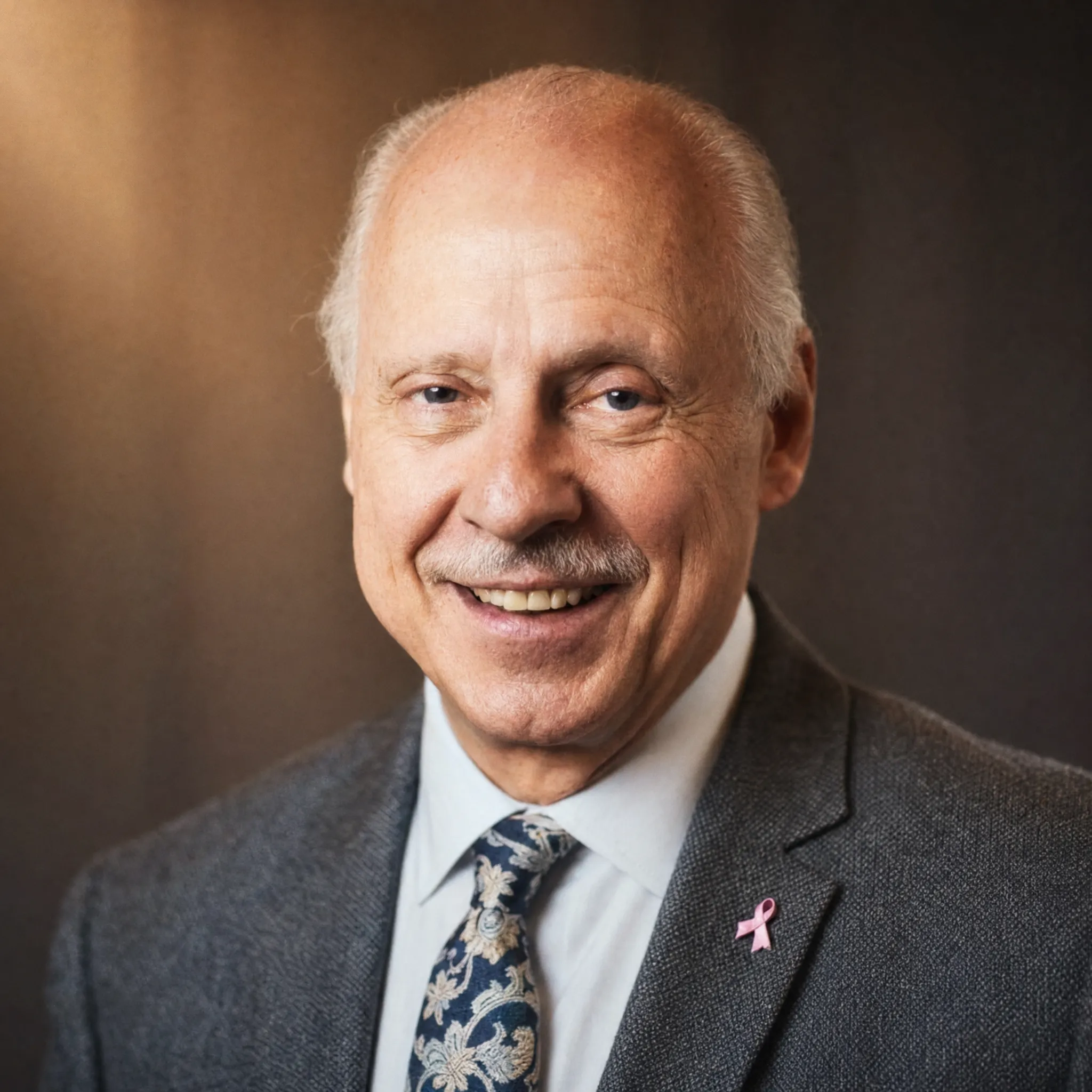
“The attribution decision is where pharmacovigilance starts, not where it ends. Burna positions the work upstream of where Argus, Veeva Vault Safety, and ArisGlobal can help. That is the structural distinction that matters for sponsor pharmacovigilance and for FDA review.”
Dr. Stefan GluckFormerly Vice President at Celgene; Chief Medical Officer at RNA Diagnostics
Sponsor-tenant Protocol Safe inside your CTMS environment.
Every AE in the SAE database carries its Burna citation chain.
ICSR intake automates; SMOs adjudicate pre-processed cases.
Audit trail complete by definition. Same citation discipline throughout.
From first-in-human through twenty-plus years of postmarket surveillance, the same citation discipline at every stage.
Trial
Burna deploys as sponsor-tenant Protocol Safe inside your CTMS environment or as a standalone hosted tenant. Coordinator and safety officer workflows are pre-configured. Protocol context remains inside your environment. DLT review committees see Burna-graded adverse events with named algorithms attached.
Submission
Every adverse event in the SAE database carries its Burna citation chain. Medical writers include the attribution logic in the CSR appendix. Reviewers read the same chain the original assigner saw. DSUR, PSUR, PBRER, and PADER evidence packages generate from live data, not from a periodic dump.
Commercial
ICSR intake automates from MAH portal, literature, social listening, and HCP reports. Burna first-passes everything: dedup, MedDRA coding, first-pass grading, narrative generation. Safety Medical Officers adjudicate every adjudication-worthy case, with a pre-processed case in five to seven minutes instead of building one from scratch in twenty-five. Signal detection surface updates daily. At blockbuster-asset scale, the business case is a spreadsheet.
Regulatory
Audit trail is complete by definition. The same citation discipline runs from first-in-human through twenty-plus years of postmarket surveillance.
Burna does not publish accuracy percentages on this page. They will be published in peer-reviewed venues. Until publication, methodology and ongoing internal testing results are available under NDA to sponsor scoping conversations.
See /validation for full detail →At a US cancer center, co-designed with Dr. Andrea Pirzkall (formerly Chief Medical Officer at Replimune and Asher Biotherapeutics; Executive Director Clinical Development at BeiGene; Principal Medical Director at Genentech). JCO Clinical Cancer Informatics manuscript target 2026 to 2027.
At a US NCI-designated comprehensive cancer center. Bio-IT World 2026 poster.
Inside an active GI oncology and Phase 1 trials program.
Pilot partners invited to scope now.
ASCO 2026 poster on time reduction per adverse event, coordinator satisfaction, and documentation completeness. Annals of Oncology manuscript target 2027 on AI-assisted grading versus expert human grading on 10,000+ real-world oncology narratives. Regulatory science journal target 2027 on retrospective audit of Protocol Safe-graded adverse events versus sponsor safety team re-adjudication.
Pre-registered endpoints. Peer-reviewed target venues. Independent IRB or HREC oversight. Conservative reporting. External co-authorship. Failed studies still publish.
Pre-negotiated, single-document downloads. The 8-page Protocol Safe technical brief covers all three for sponsor IT and procurement review. Pharmacovigilance leadership reading this page should also see /pharmacovigilance for the PV-specific architecture conversation.
Download the 8-page brief →Most sponsors recoup year-one Protocol Safe cost on a single multi-site trial through query labor compression alone. At blockbuster postmarket scale, the business case is a spreadsheet.
Per-trial deployment inside the sponsor’s cloud, with full Implementation Lead support, validation package, and GVP Module VI alignment documentation.
For sponsors running three or more active oncology programs. Cross-trial attribution consistency and shared regimen profile maintenance included.
At blockbuster-class volumes, $500K to $2M enterprise minimum. Pilot partners scoping now lock in 2026 economics ($2 to $3 per run-rate) before publication-driven price tier shifts.
Extended monitoring packages for FDA-mandated 15-year follow-up obligations; pricing on application. CRO white-label reference: $400K to $20M for top-10 CRO partnerships.
Most sponsors recoup year-one Protocol Safe cost on a single multi-site trial through query labor compression alone. At blockbuster postmarket scale, the business case is a spreadsheet. The platform is the conversation, not the tool.
What Monday looks like in your PV operation.
Monday morning in the PV operation of a sponsor running Burna across three active Phase 2 oncology trials and one Phase 3 registrational asset. The Safety Medical Officer opens her queue. Eleven cases landed over the weekend across the four programs. Each case arrives with Burna’s first-pass grade attached, the source sentence highlighted, the CTCAE TERM and CATEGORY assigned, the severity GRADE recommended, and the WHO-UMC or Kramer attribution path visible. She adjudicates eight in under twenty minutes. She escalates one, where the multi-drug attribution between the investigational asset and a concomitant medication needs medical judgment her team is uniquely positioned to apply. Her reasoning logs back into the system. The calibration improves quietly behind her work.
The Head of PV Operations opens the cross-trial dashboard. Attribution consistency across the four sites of the Phase 3 trial is up since Protocol Safe deployment. Three corrective action plans from the last DSUR cycle are now closed. The DSMB packet for the lead Phase 2 trial is one click from final. The CSR appendix for the registrational asset writes itself from the live citation chain, not from a periodic data dump.
The VP Pharmacovigilance reviews the postmarket signal detection surface for the company’s blockbuster commercial asset. The day’s ICSR intake (literature, HCP reports, MAH portal, social listening) has been first-passed, deduplicated, MedDRA-coded, and narrative-drafted. The cases worth her team’s adjudication time are surfaced and ranked. The 21 CFR 314.80 obligation is met by construction, with the audit trail complete by definition.
The FDA EDSTP submission for the registrational asset is on the desk Friday.
The eight we hear most often from sponsor PV leadership.
Read the full FAQ →No. Burna accelerates them. SMOs adjudicate every adjudication-worthy case. Burna handles intake, deduplication, MedDRA coding, first-pass grading, and narrative draft. The ratio changes. The judgment stays human. AI suggests; clinicians decide. Human-in-the-loop, always.
Those systems manage cases, workflows, reporting, and submissions after attribution has been made. Burna operates upstream, where the investigator is deciding what caused the adverse event in the first place. Burna integrates with downstream systems; the two are complementary in a sponsor PV stack.
Sponsor-tenant deployment inside your AWS, Azure, or GCP environment. The engine reads your protocol inside your boundary. Content boundary middleware separates the reasoning surface from the model boundary. Only structured probability scores, attribution signals, and citation chains cross the boundary. The protocol text does not leave sponsor infrastructure. Architecture diagram available in the 8-page Protocol Safe technical brief.
Full MedDRA v28.0 at launch, aligned with CTCAE v6.0. Refreshed with each NCI CTCAE release. Oncology-specific coding (immune-related adverse events, cytokine release syndrome, neurotoxicity variants, CRS grading, ICANS grading) is explicitly modeled, not post-hoc mapped. See /meddra-coding for the full coding capability.
Validation package ships with every engagement. 21 CFR Part 11 compliance attested; audit-ready. GVP Module VI alignment documented. Burna AI is eligible for the CDER Emerging Drug Safety Technology Program (EDSTP). Pre-submission validation assistance available for EDSTP participants and EMA CSR submissions.
Yes. $5M to $20M enterprise pricing for top-10 CRO partnerships. Active conversations underway with three of the top-10 global CROs.
Regional cloud deployments available across 11 jurisdictions. Data does not cross jurisdictions without explicit configuration. Sovereign cloud partnerships in negotiation for Oracle Australia, G42 UAE, and STC Saudi Arabia.
No. Burna is a clinical decision support tool. SMOs and investigators approve every output. The platform does not prescribe, modify dose, or alter care pathways. 21 CFR Part 11, SOC 2, HIPAA, and GDPR aligned.
For oncology programs running multi-site trials with attribution drift, protocol sensitivity, or safety data quality concerns before pharmacovigilance case management begins, Protocol Safe is the architecture conversation to have.
The 2026 design partner cohort accepts Protocol Safe scoping conversations through the end of Q3 2026. Postmarket pharmacovigilance module launches 2027; pilot partners scoping now lock in 2026 economics ($2 to $3 per ICSR run-rate) before publication-driven price tier shifts.
Scope, endpoints, validation evidence, and deployment timeline are defined before kickoff. The Master Service Agreement, Quality Agreement, and Data Processing Agreement are pre-negotiated single-document downloads.
For pilot scoping conversations later in 2026. Subscribe to the quarterly safety and data quality briefing. Validation readouts, design partner cohort updates, and conference timing only.
No tracking beacons, no marketing email cadence.