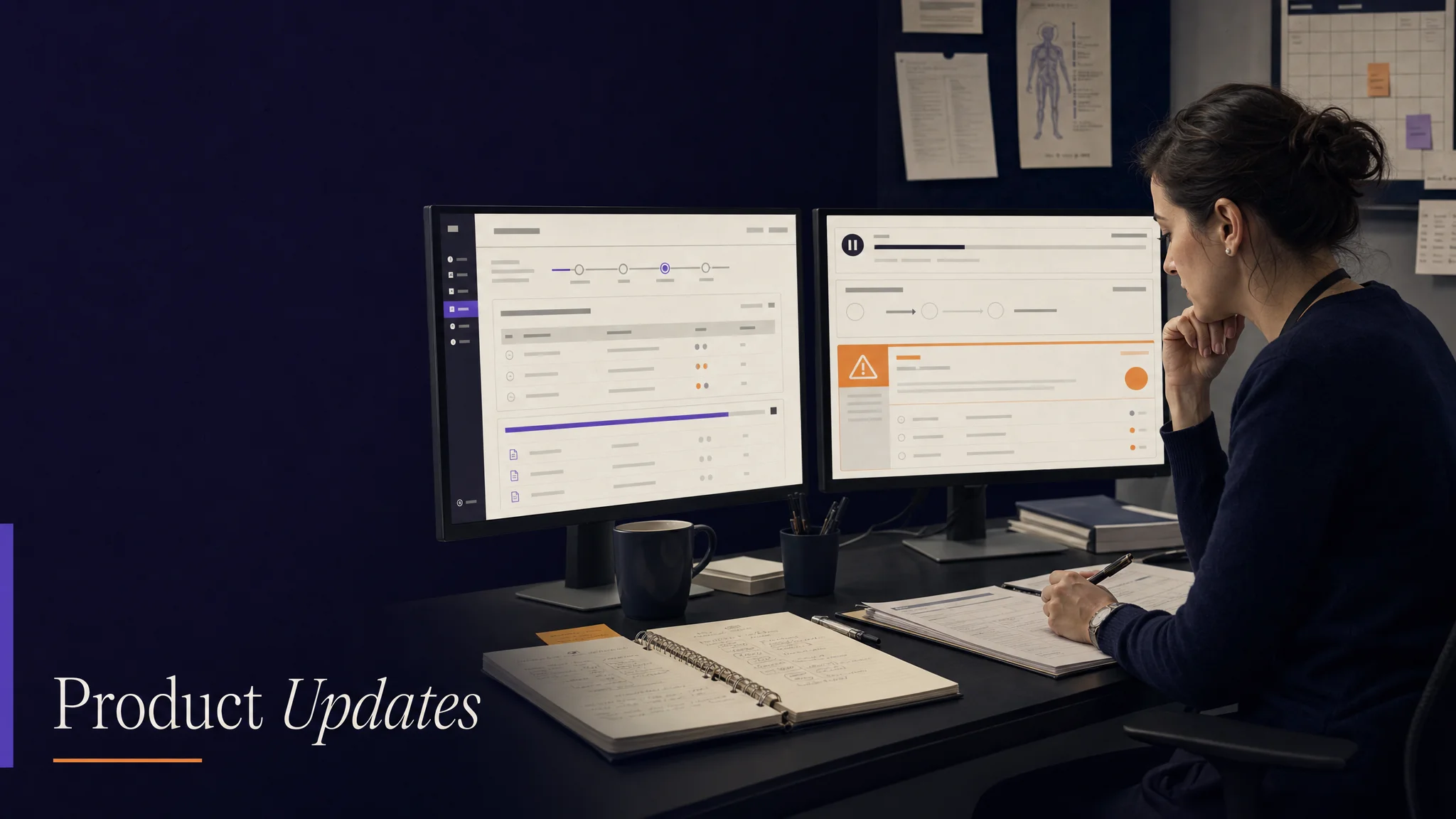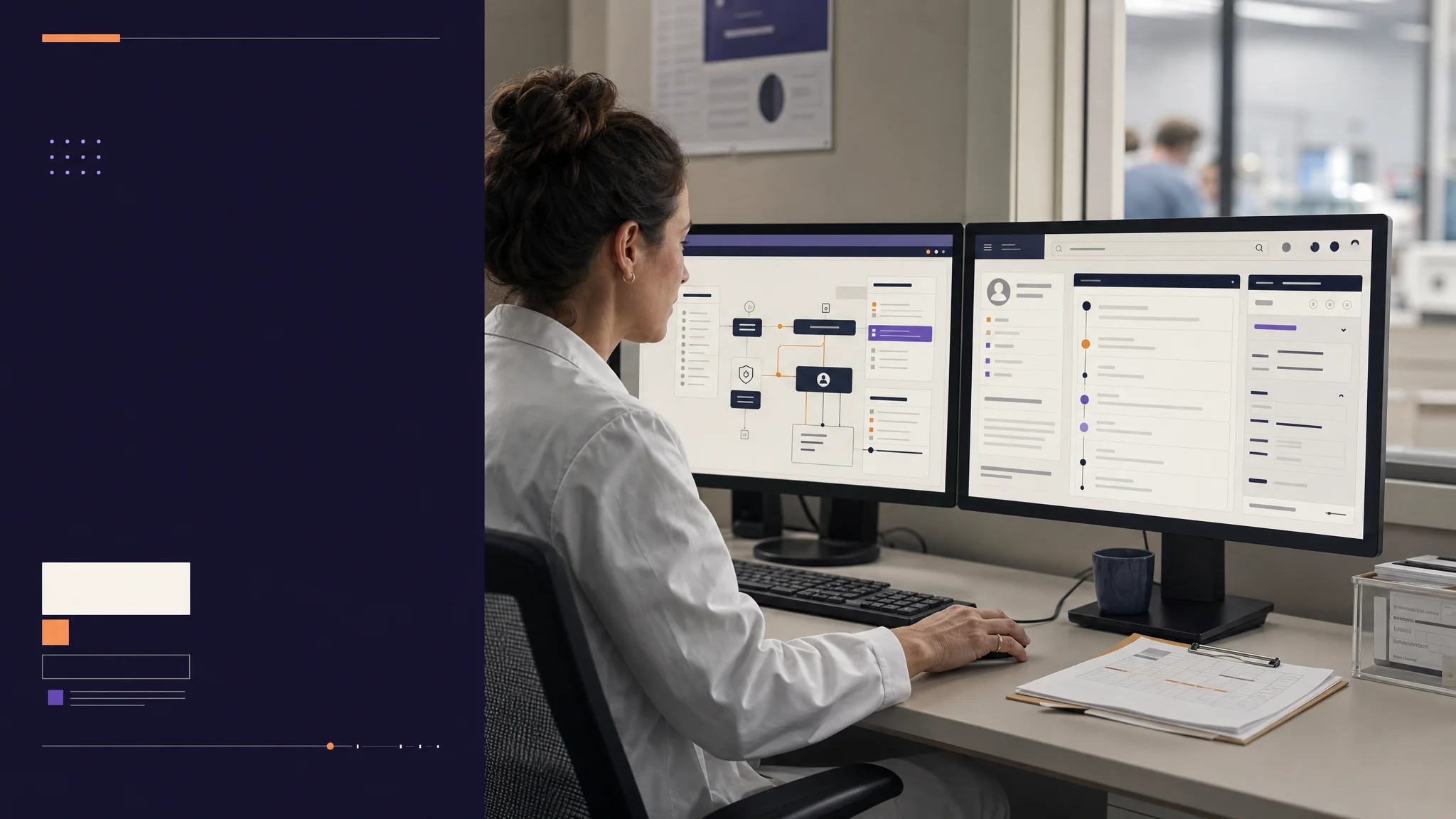
Coordinators spend a surprising amount of time moving data between systems and resolving grading disagreements one at a time. This week we collapsed both of those flows, and we doubled the vocabulary the synonym mapper recognizes.
Three friction points removed in the daily grading flow
Coordinators in oncology trials spend a surprising amount of time on three repetitive frictions: copy-pasting clinical notes from the EHR into the grading tool, tabbing back and forth to resolve grade disagreements one at a time, and stopping mid-grading to verify that a term the coordinator used matches a CTCAE criterion the system recognizes.
This week we collapsed all three. Clinical notes import directly from Epic or Oracle Health into the grading workflow. Grade disagreements resolve in batch rather than one at a time. And the synonym mapper now covers immune-related adverse events and CAR-T-specific terminology so the system stops asking the coordinator to translate.
Here is what shipped, why it matters, and what is next.
Feature Highlight 1: EHR encounter import in one step
Providers can now search for a patient in their EHR (Epic or Oracle Health via SMART on FHIR), browse encounters by date range, and import a clinical note into the CTCAE grading workflow with a single click.
The import works in two phases:
- Select a patient by searching the EHR by name, date of birth, or patient ID, or pick from previously synced patients
- Browse encounters filtered by date range, select one, and the clinical note text loads into the grading input automatically
Patient assignment happens automatically on import. If the coordinator imports the wrong note, an undo control reverses the assignment.
Under the surface, the import uses FHIR R4 document and binary resources with multiple fallback strategies for note extraction, including handling inline base64-encoded content and stripping HTML formatting so the grading input receives clean text.
The downstream effect: coordinators managing dozens of active trials stop switching between the EHR and the grading platform. The clinical note flows directly into grading with its patient context intact.
Feature Highlight 2: Batch adjudication for grade disagreements
When two independent raters disagree on a CTCAE grade (which happens in roughly twenty to thirty percent of manually-graded cases), an adjudicator reviews both assessments. Until this week, each disagreement required a separate submission. For an adjudicator handling a batch of conflicts at the end of the day, that meant N round trips for N conflicts.
The redesigned adjudication view presents all grade disagreements for a case in a single workspace. The adjudicator reviews each collision, makes the decision, and submits all resolutions in one batch. In staging measurement, this reduced adjudicator response time approximately forty percent by collapsing the network roundtrips from N to one.
The adjudication view also handles edge cases more gracefully: empty states when no disagreements exist, optional rather than required adjudicator notes, and clearer visual presentation of each rater's grade alongside the CTCAE criteria.
The clinical research director's view: faster adjudication means the grading pipeline stays moving. When the team is managing high-volume oncology trials with multiple raters, reducing the adjudication bottleneck has a direct, measurable impact on trial throughput.
Feature Highlight 3: 150 CTCAE synonym terms
Clinical documentation uses varied terminology. A coordinator might write "hand-foot syndrome" while the CTCAE criteria list "palmar-plantar erythrodysesthesia." The synonym mapper needs to recognize both.
The v4 synonym mapper expands from 73 to over 150 term entries, with new coverage for drug-specific toxicity language across common oncology regimens, immune-related adverse event terminology for checkpoint-inhibitor trials, CAR-T-specific patterns for cellular therapy adverse events, and mappings audited against the actual clinical documentation from partner sites.
The downstream effect: fewer unmatched terms during automated grading. Less manual intervention. More accurate first-pass results.
Improvements
- Reliable report generation: resolved several edge cases in the report pipeline (workflow step naming mismatches, payload validation, a PDF crash caused by Unicode characters). Reports now generate idempotently with fallback data sources, and users can manually retry if automatic generation fails.
- Accurate SAE counts: the Serious Adverse Event count in the clinical summary now derives from the current graded events list rather than a cached value. The SAE alert banner now reflects Grade 3-5 events accurately, which matters for regulatory reporting workflows.
- Cleaner result displays: new components for CTCAE result and drug attribution display use collapsible sections to reduce information overload during clinical review.
- Workflow trigger consolidation: all CTCAE workflow triggers consolidated into a single unified entry point. About 200 lines of legacy code removed; type safety improved throughout. The "Clinical Decision" workflow renamed to "Drug Interaction" for clearer clinical semantics.
Looking Ahead
Next: expanded EHR integration coverage, continued adjudication experience improvements, and additional validation tooling for batch grading.
More Friday updates at burna.ai/blog.